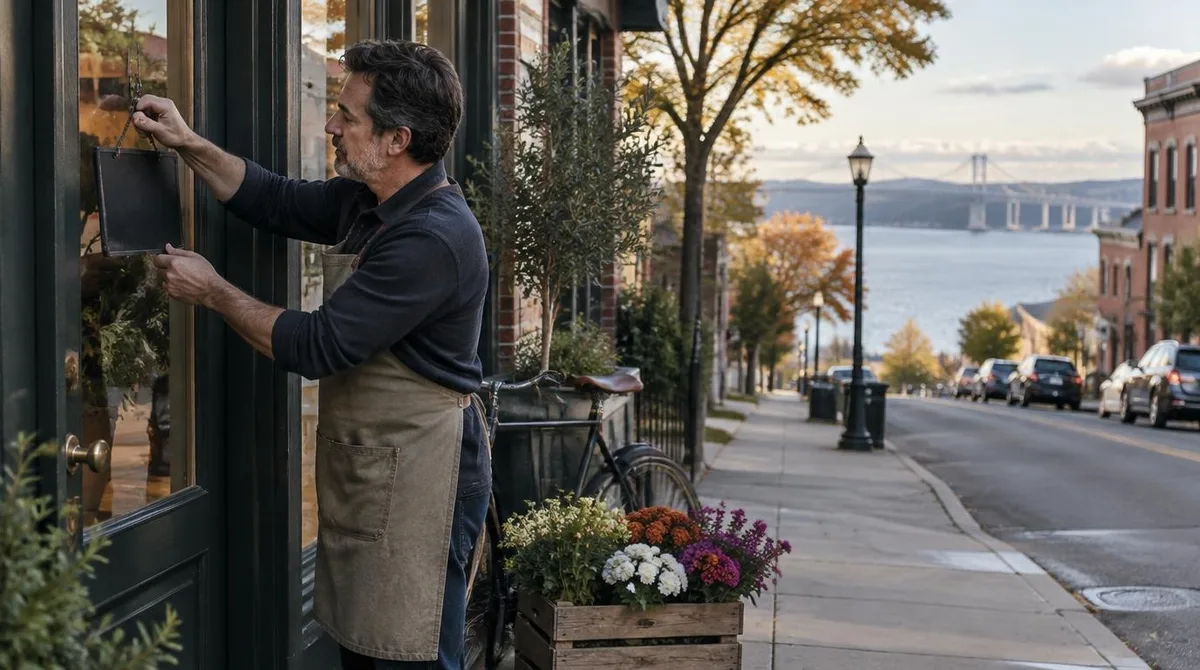
Nyack NY is a river village on the west bank of the Hudson in Rockland County, part of the town of Orangetown, with 7,265 residents counted at the 2020 census. The village covers less than a square mile of land, and its grid of streets runs from the water up the slope toward the ridgeline, so steep water views appear at the end of unexpected blocks.
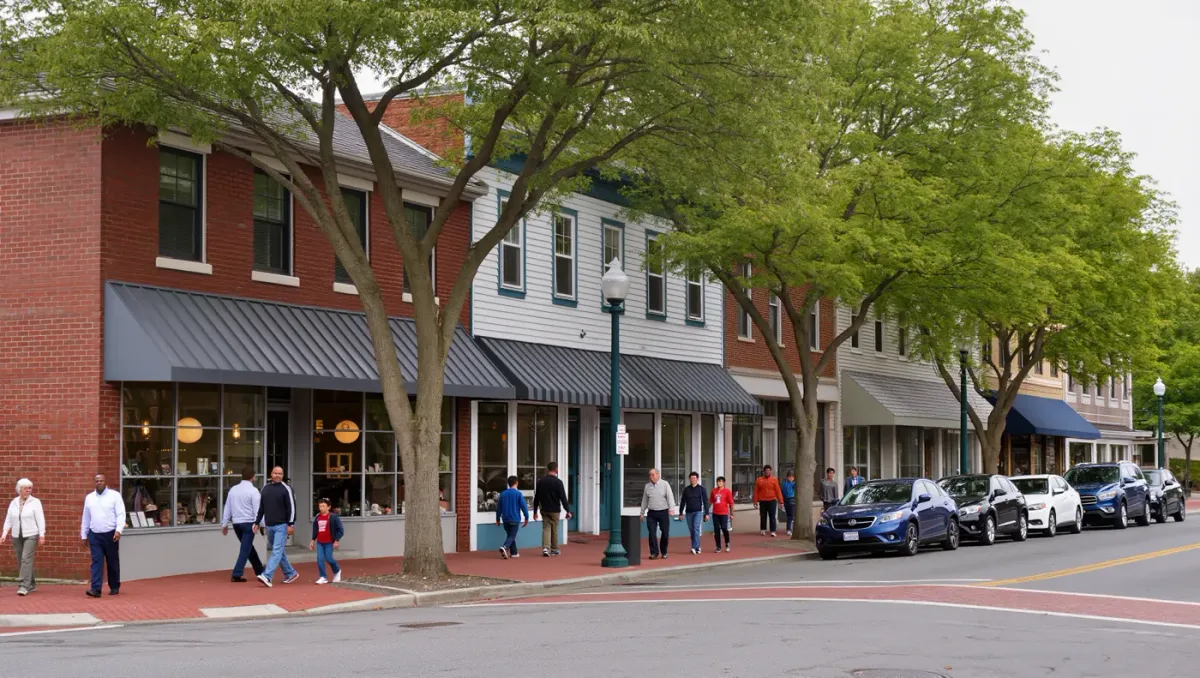
Broadway works as the village spine. Village Hall stands at 9 North Broadway, the Edward Hopper House Museum and Study Center sits farther north at 82 North Broadway, and Main Street meets the Broadway corridor in the walkable shopping core. The village posts its meeting agendas, newsletters and event calendar through its official website, which keeps civic rhythm visible to anyone watching.
The neighborhoods that ring Nyack NY
Nyack does not stand alone. Upper Nyack, a separate village, continues north along the river, and South Nyack sits below the downtown toward the wide reach of the Tappan Zee. Inland, the hamlets of Central Nyack and West Nyack carry the same name into the town maps, and Blauvelt and Orangeburg sit farther south in Orangetown. Locals treat the whole cluster as the Nyacks, and the shared name reflects a shared history of river trade and quarrying.
The steep ground above the village belongs to parks and old estates. Hook Mountain rises at the northern end of the shoreline, and the cliffs above Main Street still show the shaping hand of the quarries that shipped stone down the Hudson in the nineteenth century.
Streets and daily rhythms
Main Street holds the tables, shops and Saturday foot traffic that define the village. Franklin Street adds restaurants a block off the corner, and South Broadway stretches toward the highway interchanges with older commercial blocks. Parking fills early on weekends, and residents plan around it the way shore towns plan around tides.
The civic calendar follows the village year: board meetings at Village Hall, volunteer fire company events, street festivals run by the chamber and a farmers market in the warm months. Nothing in Nyack sits more than a few minutes' walk from anything else, which is the point. Weekends bring sidewalk tables and window shoppers up from the city, and weeknights hand the streets back to dog walkers and dinner crowds.
Edward Hopper's Nyack NY
The painter Edward Hopper was born in Nyack in 1882, in a house at 82 North Broadway that his grandfather built in 1858. Hopper lived there until 1910, and after the family line ended, local residents saved the house from demolition and restored it. It entered the National Register of Historic Places in 2000, and today it operates as a museum and study center with exhibitions drawn from his legacy.
Hopper and his wife Josephine are buried at Oak Hill Cemetery on the hill above the village. The museum runs a walking tour of Hopper's Nyack, which threads the church steeples and river views that recur in sketches from his early years.
Down at the river
Nyack NY faces the water from every downhill block. Nyack Beach State Park holds 61 acres of riverfront at the northern edge of the village cluster, with an entrance on North Broadway in Upper Nyack. Picnicking, hiking, bicycling and fishing fill the park in warm weather, kayaks and windsurfers launch from its shore, and cross-country ski trails open in winter. The park sits directly below Hook Mountain, so its flat walking path runs between cliff and river, one of the narrowest public shorelines on the Hudson.
The village marina and its adjacent park sit at the foot of Main Street, and the river traffic never stops: barges push south with the tide, and weekend sails tack across from Tarrytown. Commuters cross the river by bus and bridge, and the village keeps a park-and-ride rhythm of its own.
Conclusion: a village that faces the water
Nyack NY earns its reputation by staying small on purpose. The village keeps a museum in a painter's first house, a state park at the end of a street, and a Main Street that empties onto a working river. Its neighborhoods climb from marina to ridge within a single square mile, and its rhythms follow the water, the school calendar and the weekend crowds. For a village of about 7,000 people, Nyack carries an outsized share of the lower Hudson Valley's character, and it does so at walking pace. For related coverage, see Hudson River Valley: A Region Measured in Towns, Tides and Painters.